
Paintless Dent Repair Explained: The Smart Way to Remove Car Dents Without Repainting
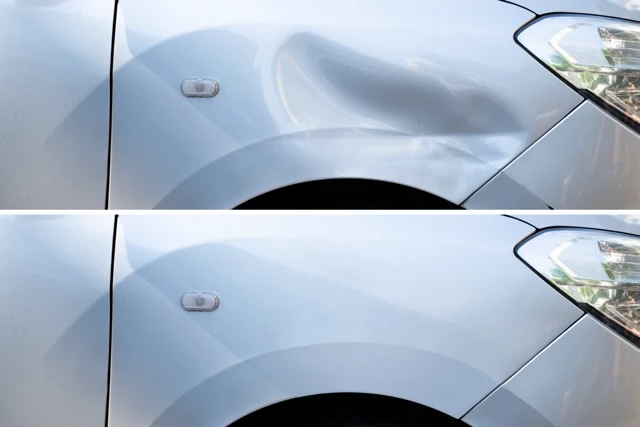
Paintless Dent Repair Explained: The Smart Way to Remove Car Dents Without Repainting
Few things ruin the look of a vehicle faster than a dent.
It only takes one careless parking lot accident, a runaway shopping cart, hail damage, or a small fender bump to leave an ugly mark on an otherwise beautiful car. For many drivers, dents feel unavoidable — but traditional repair methods often sound expensive, time-consuming, and frustrating.
That’s where paintless dent repair changes everything.
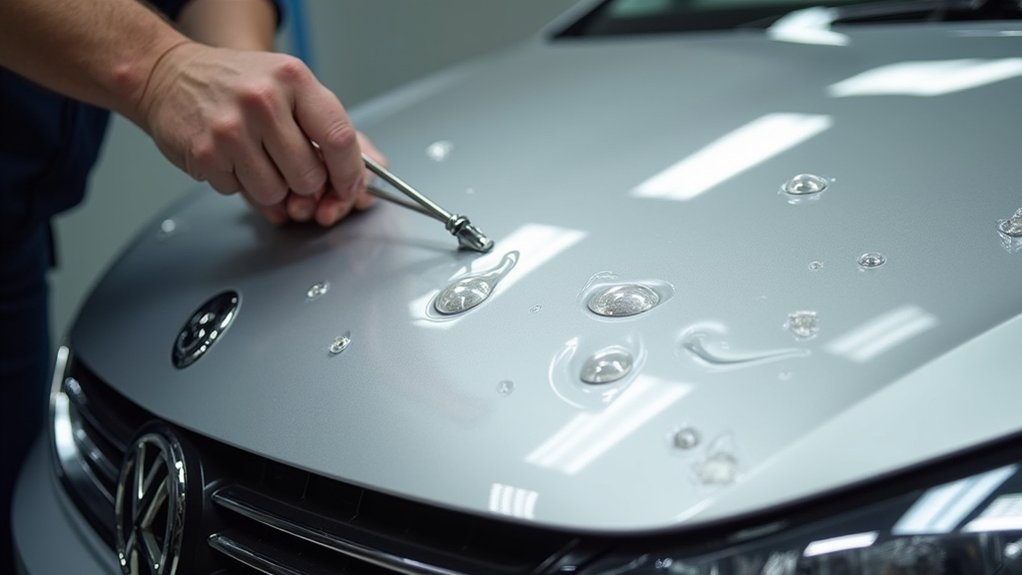
Instead of sanding, filling, and repainting damaged panels, paintless dent repair — commonly known as PDR — restores dents by carefully reshaping the metal from behind the panel without affecting the vehicle’s original paint.
The result?
Faster repairs.
Lower costs.
And a factory-quality finish that often looks untouched.
Over the last several years, paintless dent repair has become one of the most popular solutions in the automotive industry because it combines efficiency, affordability, and impressive results in ways traditional body shop repairs often cannot.
For drivers who want their vehicles looking clean without spending thousands on repainting, PDR has quickly become the preferred option.
What Is Paintless Dent Repair?
Paintless dent repair is a specialized automotive repair technique used to remove minor dents, dings, creases, and hail damage without repainting or replacing vehicle panels.
Unlike conventional body repair methods that rely on fillers, sanding, and paint matching, PDR works by gently massaging damaged metal back into its original shape using professional tools and precise pressure techniques.
The key advantage is simple:
The factory paint remains completely intact.
As long as the paint surface hasn’t cracked or chipped, skilled technicians can often restore damaged areas so effectively that the dent becomes nearly impossible to detect.
Paintless dent repair is commonly used for:
- Door dings
- Hail damage
- Minor collision dents
- Parking lot damage
- Soft body creases
- Small impact dents
Because modern automotive paint systems are designed to be flexible and durable, many dents can now be repaired without the need for repainting at all.
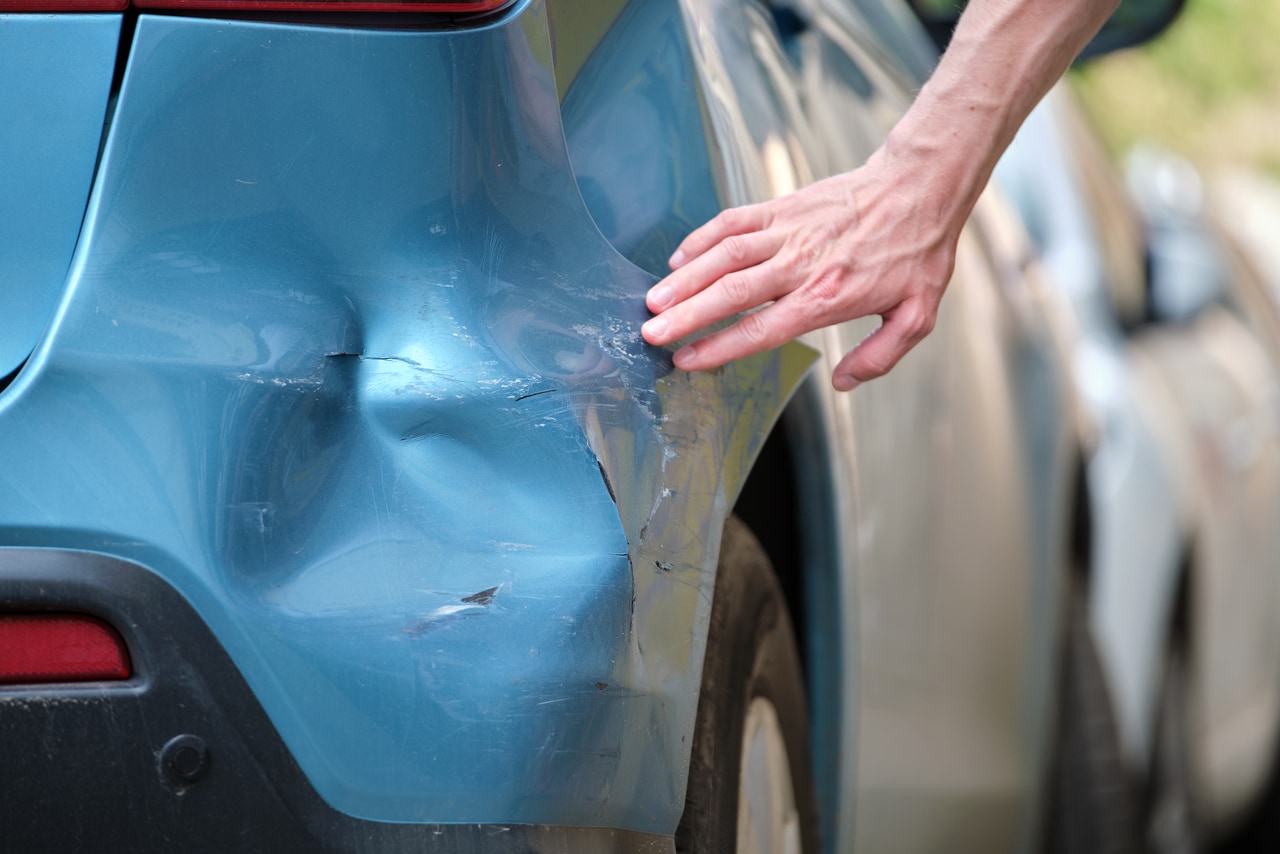
How Paintless Dent Repair Works
The PDR process may look simple from the outside, but it actually requires a high level of skill, patience, and precision.
Technicians begin by carefully analyzing the damaged area to determine whether paintless repair is possible. The size, depth, location, and condition of the paint all affect whether the dent qualifies for PDR.
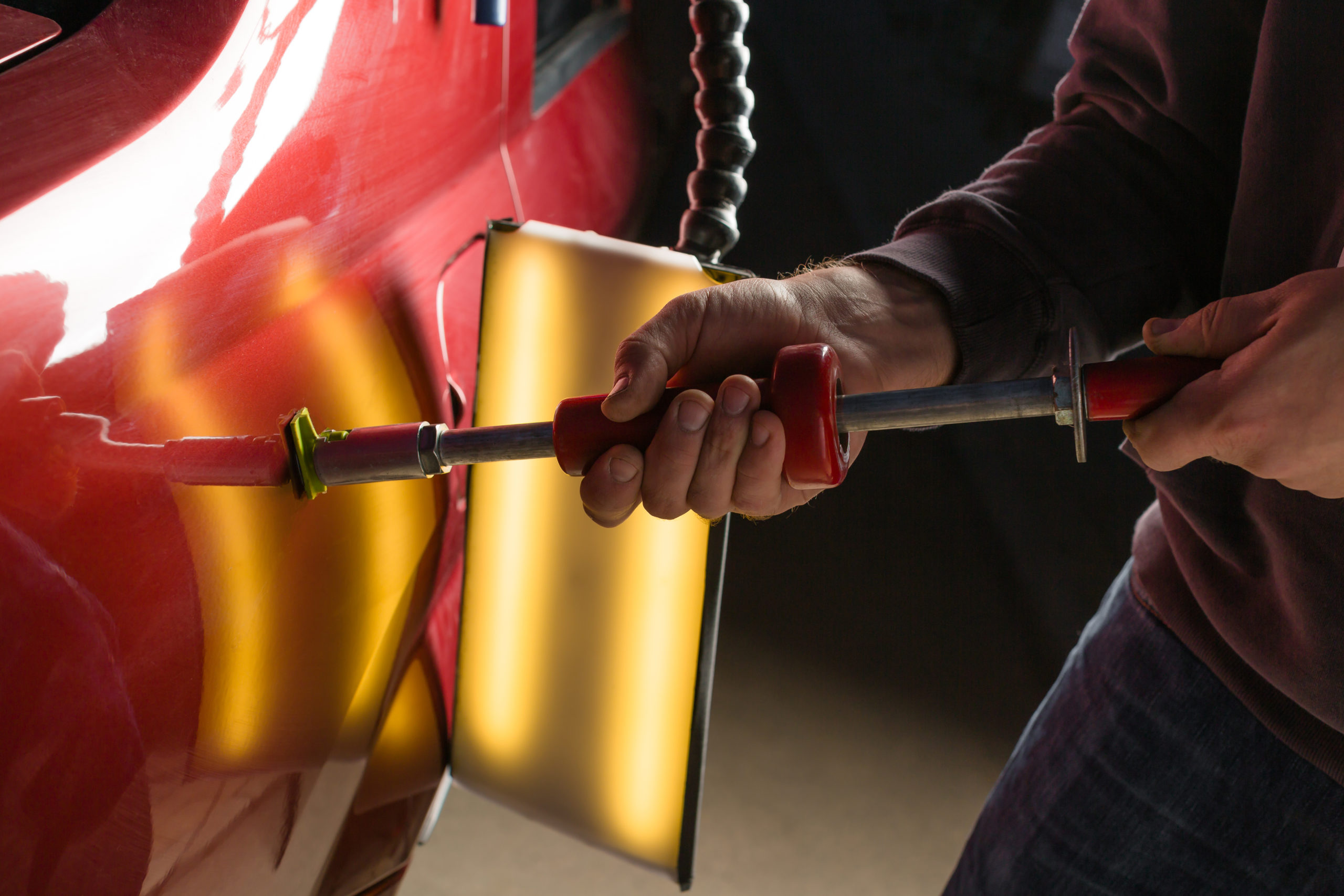
Once approved, technicians gain access behind the damaged panel using specialized tools designed specifically for controlled metal manipulation.
These tools allow them to slowly push and massage the dent outward from behind the surface.
In some cases, technicians may also use specialized pulling techniques from the outside of the panel when rear access is limited.
The process requires incredible precision because even small amounts of pressure can affect the metal shape. Experienced technicians often use reflection boards or LED lighting systems to track tiny surface distortions while repairing the dent.
Step by step, the damaged metal is carefully restored to its original form without disturbing the surrounding paint.
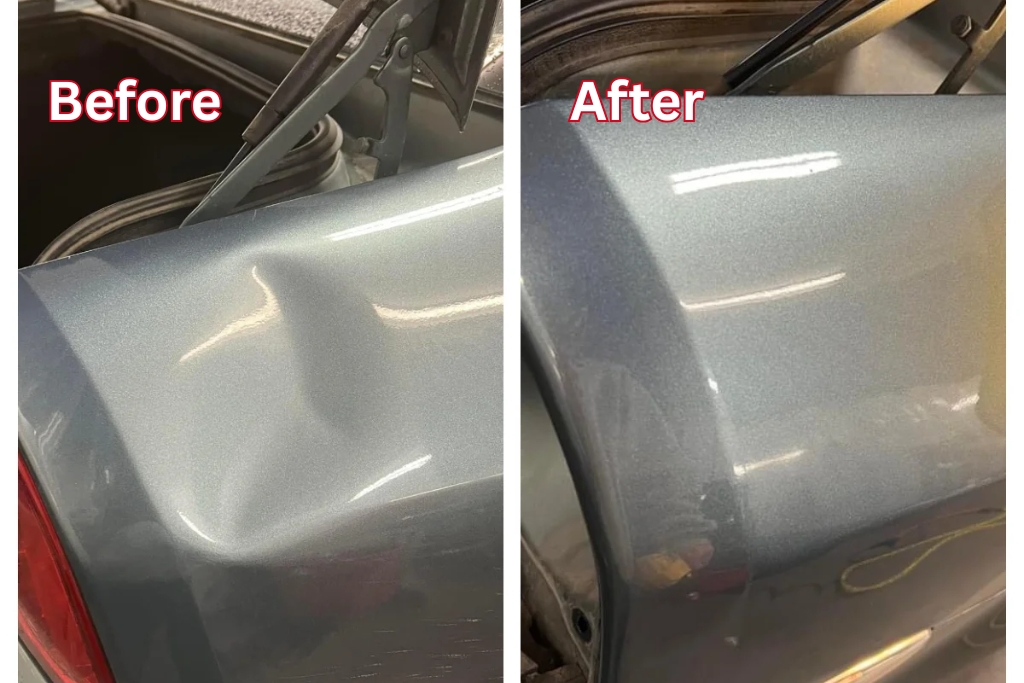
When completed correctly, the repair can appear virtually invisible.
Why Drivers Prefer Paintless Dent Repair
One of the biggest reasons PDR has become so popular is because it solves several major frustrations associated with traditional body repairs.
1. It Preserves the Original Paint
Factory paint finishes are extremely valuable. Once a vehicle is repainted, it may lose part of its original factory quality and resale appeal.
Paintless dent repair keeps the original finish untouched, which helps maintain vehicle value and appearance.
2. Repairs Are Usually Faster
Traditional collision repairs may take several days or even weeks depending on parts, repainting, and curing times.
Many PDR repairs can be completed within hours.
For busy drivers, that convenience makes a huge difference.
3. Lower Repair Costs
Because PDR avoids expensive paint materials, fillers, and labor-intensive refinishing work, it’s often significantly cheaper than traditional body repair.
Minor dents that would normally require major body shop work can sometimes be repaired quickly at a fraction of the price.
4. Better for Resale Value
Vehicles with original paint generally retain higher resale value compared to cars with aftermarket repainting.
Potential buyers often prefer factory finishes because repainting can sometimes raise concerns about hidden damage history.
5. Environmentally Friendly
Traditional body repair generates paint waste, chemicals, and sanding materials.
Paintless dent repair avoids most of these environmental impacts, making it a cleaner and more sustainable repair method.
What Types of Dents Can Be Repaired?
Although PDR is extremely effective, not every dent qualifies for paintless repair.
The best candidates typically include:
- Small to medium dents
- Smooth body damage
- Hail dents
- Shallow creases
- Damage where paint remains intact
However, larger dents can sometimes still be repaired depending on the flexibility of the metal and paint condition.
Several factors determine repair success:
- Dent depth
- Panel material
- Paint flexibility
- Damage location
- Sharpness of impact
For example, shallow dents on flat surfaces are often easier to repair than sharp creases located near panel edges.
Aluminum panels can also be repaired with PDR, though they usually require more advanced techniques because aluminum behaves differently than steel.
Hail Damage and Paintless Dent Repair
One of the most common uses for paintless dent repair is hail damage restoration.
Severe hailstorms can leave vehicles covered with dozens — or even hundreds — of small dents across the hood, roof, trunk, and doors.
Traditional repair methods for this level of damage can become extremely expensive and time-consuming. PDR allows technicians to restore multiple dents efficiently while preserving the factory finish.
Insurance companies frequently approve PDR for hail claims because it reduces repair costs while delivering excellent cosmetic results.
For many vehicle owners, paintless dent repair becomes the fastest and most affordable solution after major storms.
Paintless Dent Repair vs Traditional Body Repair
Both repair methods have their place, but they serve different types of damage.
Paintless Dent Repair Is Best For:
- Minor dents
- Door dings
- Hail damage
- Preserving original paint
- Faster turnaround
- Lower repair costs
Traditional Repair Is Better For:
- Cracked paint
- Deep collision damage
- Torn metal
- Severe structural damage
- Major body panel replacement
In some situations, body shops may even combine both methods. Technicians sometimes use PDR to minimize damage before applying minimal refinishing work, reducing overall repair time and costs.
Does Paintless Dent Repair Really Work?
Absolutely — when performed by skilled technicians.
Many people are surprised by how effective professional PDR can be. Small and moderate dents often disappear almost completely after repair.
The reason the process feels so impressive is because it restores the metal rather than hiding the damage underneath filler or paint.
However, technician experience matters tremendously.
Poorly performed repairs can leave visible distortions, uneven surfaces, or overstretched metal. That’s why choosing an experienced PDR specialist is critical for achieving professional results.
How Long Does Paintless Dent Repair Take?
Repair time depends on:
- Dent size
- Number of dents
- Damage location
- Accessibility
- Vehicle type
Simple dents may take less than an hour.
Moderate repairs often take several hours.
Large hail repairs may require multiple days.
Even so, PDR is usually much faster than conventional body repair because there’s no repainting or drying process involved.
Is Paintless Dent Repair Worth It?
For many vehicle owners, absolutely.
Paintless dent repair offers one of the best combinations of affordability, speed, convenience, and cosmetic quality available in modern automotive repair.
Instead of replacing panels or repainting entire sections of a vehicle, PDR restores damage while preserving the original factory finish — something traditional repair methods often cannot fully replicate.
Whether you’re fixing a small parking lot ding or recovering from a major hailstorm, paintless dent repair provides a smart and effective solution that keeps vehicles looking clean without unnecessary body shop costs.
Most importantly, it proves that not every dent requires expensive repainting or major repairs.
Sometimes, the smartest fix is the simplest one.