
Revolutionary EV Charging Plans Set to Transform America’s Electric Future
Introduction
The electric vehicle (EV) revolution in the United States is gaining serious momentum, and a newly revealed charging initiative is poised to accelerate that shift in a big way. With growing consumer demand, government backing, and private-sector investment, the next generation of EV charging infrastructure promises faster speeds, broader accessibility, and a seamless experience for drivers across the country.
A recent report highlights a groundbreaking partnership and deployment strategy that could dramatically reshape how Americans charge their electric vehicles. From ultra-fast charging speeds to nationwide retail integration, this new plan represents a major step toward eliminating one of the biggest barriers to EV adoption: charging convenience.
A New Era of EV Charging Infrastructure
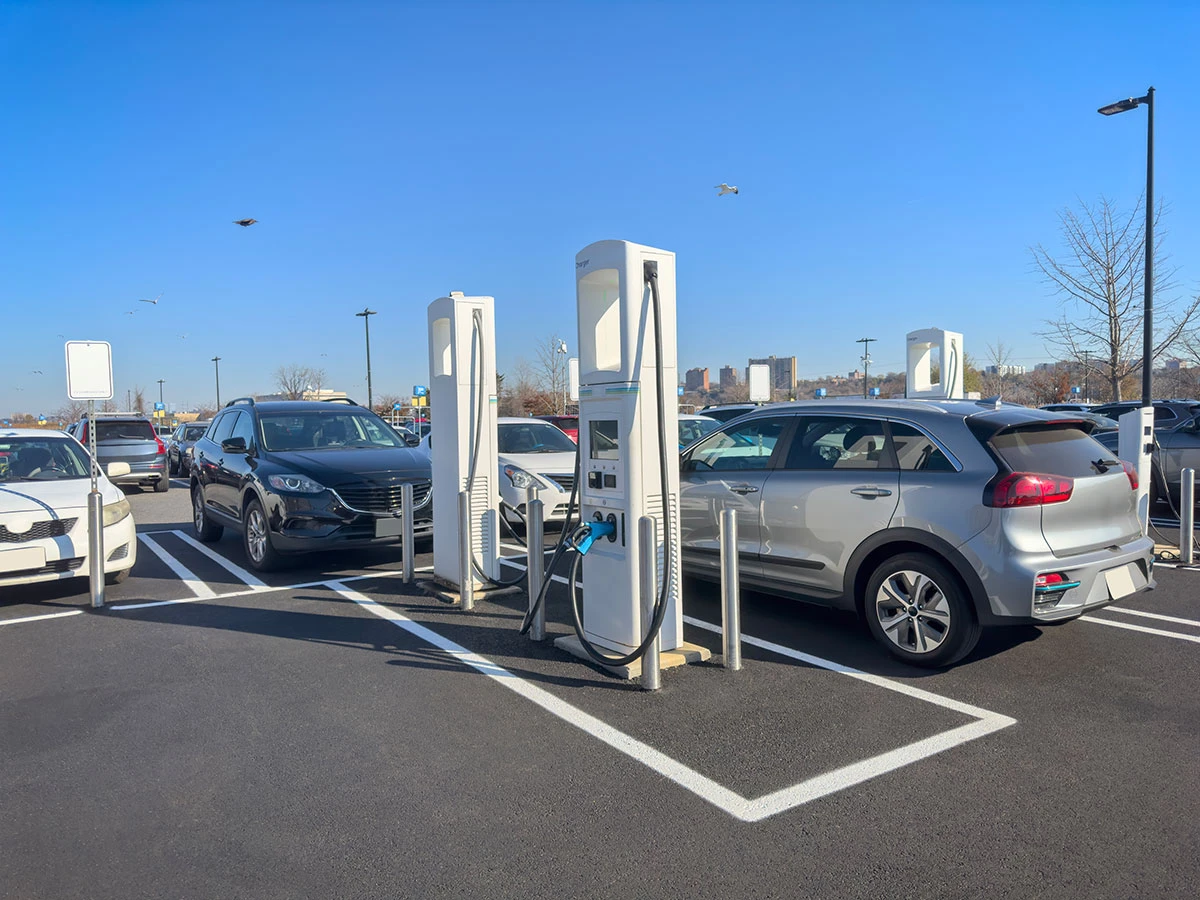
The latest plans center around deploying a network of ultra-fast charging stations across key retail locations in the United States. These stations are expected to feature cutting-edge technology capable of delivering up to 400-kilowatt charging speeds—far beyond what many current public chargers offer.
Each charging site will reportedly include multiple stalls—up to 10 per location—designed to accommodate a wide range of electric vehicles. Importantly, these chargers will support both CCS and NACS connectors, ensuring compatibility across nearly all EV brands on the road today.
This level of interoperability is crucial. One of the biggest frustrations for EV drivers has been the lack of universal charging standards. By supporting multiple connector types, the new network aims to simplify the experience and remove confusion for consumers.

Strategic Retail Partnerships: Charging Where People Already Go
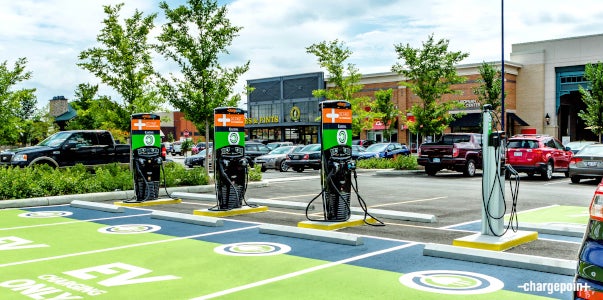
One of the most innovative aspects of the plan is its focus on retail locations. Instead of placing chargers in isolated areas, developers are integrating them into shopping centers and high-traffic destinations.
The initiative includes partnerships with major real estate investment firms that manage retail properties across the country. This means drivers will be able to charge their vehicles while shopping, dining, or running errands—turning charging time into productive time.
Initial rollout sites are expected to include locations in cities like Phoenix, Pennsylvania suburbs, and Florida shopping hubs, with expansion planned nationwide.
This approach aligns with changing consumer behavior. People prefer convenience, and placing chargers where they already spend time increases the likelihood of widespread adoption.
Ultra-Fast Charging: A Game-Changer for EV Owners
Speed is everything when it comes to EV charging. The introduction of 400-kW chargers marks a significant leap forward in reducing charging times.
Currently, many public chargers operate at lower speeds, meaning drivers may need 30 minutes to an hour for a substantial charge. With ultra-fast chargers, that time could be dramatically reduced, making EV ownership more practical for long-distance travel and daily use.
Industry trends suggest that even faster chargers—up to 600 kW—are already in development, aiming to deliver near full charges in as little as 10 minutes in the future.
While most current vehicles cannot yet fully utilize such high power levels, these new installations are being designed with future EV technology in mind. This “future-proofing” ensures that infrastructure won’t quickly become outdated.
Private Sector Driving the EV Boom
Interestingly, much of the momentum behind EV charging expansion is now coming from private companies rather than government programs.
Recent data shows that the U.S. already has around 230,000 public charging connectors, with significant growth driven by private investment.
Companies are recognizing that charging infrastructure is not just a necessity—it’s a business opportunity. By investing in charging networks, they can attract customers, increase foot traffic, and position themselves at the forefront of a rapidly evolving market.
This shift also helps accelerate deployment timelines. While federal programs can take years to implement, private companies often move faster, bringing new charging stations online more quickly.
Complementing Federal Initiatives
Although private investment is leading the charge, government support still plays a critical role.
The U.S. has long-term goals to expand EV charging infrastructure nationwide, including plans to build hundreds of thousands of charging stations. Federal programs aim to ensure that chargers are available along major highways and in underserved areas, helping reduce range anxiety for drivers.
Together, public and private efforts create a powerful synergy. Government funding provides the foundation, while private innovation drives efficiency and scale.
Why This Matters for EV Adoption
The success of electric vehicles depends heavily on the availability and reliability of charging infrastructure. For many consumers, concerns about where and how to charge remain a major barrier to switching from gasoline-powered cars.
This new charging initiative directly addresses those concerns:
- Convenience: Chargers at retail locations make charging part of everyday life
- Speed: Ultra-fast charging reduces downtime
- Compatibility: Support for multiple connectors ensures ease of use
- Scalability: Nationwide rollout expands access across regions
By solving these challenges, the plan could significantly boost consumer confidence and accelerate EV adoption across the United States.
Challenges Ahead
Despite the optimism, several challenges remain.
Grid Capacity
As more high-power chargers come online, the demand on the electrical grid will increase. Ensuring that infrastructure can handle this load is essential.
Cost of Deployment
Building ultra-fast charging stations is expensive. While private investment helps, long-term profitability will depend on usage rates and pricing strategies.
Technology Alignment
Not all EVs can currently take full advantage of ultra-fast charging speeds. It may take several years for vehicle technology to catch up with infrastructure capabilities.
The Future of EV Charging in America
Looking ahead, the future of EV charging in the U.S. appears bright. Innovations in battery technology, charging speed, and network integration are converging to create a more user-friendly ecosystem.
We can expect to see:
- Faster charging times approaching traditional gas refueling
- More widespread availability in both urban and rural areas
- Improved reliability and user experience
- Integration with smart grids and renewable energy sources
As these developments unfold, electric vehicles will become increasingly practical for a broader range of consumers.
Conclusion
The newly revealed EV charging plans represent a pivotal moment in America’s transition to electric mobility. By combining ultra-fast charging technology, strategic retail partnerships, and broad compatibility, this initiative addresses many of the key barriers that have slowed EV adoption.
With both private companies and government agencies working toward a common goal, the U.S. is moving closer to a future where electric vehicles are not just an alternative—but the norm.
For drivers, this means greater convenience, shorter charging times, and more confidence in making the switch. And for the country as a whole, it marks another step toward a cleaner, more sustainable transportation system.